Alaska Packing List Summer: The Definitive 3-Layer Subarctic Guide
How to dress for 20-degree maritime temperature swings, glacial wind chills, and relentless summer daylight without overpacking heavy winter luggage.
An Alaska packing list summer requires a 3-layer moisture-wicking clothing architecture (merino wool base layer, insulating fleece/down mid layer, and 100% waterproof Gore-Tex outer shell), paired with waterproof hiking boots, EPA-approved bear spray, and 100% UV polarized sunglasses.
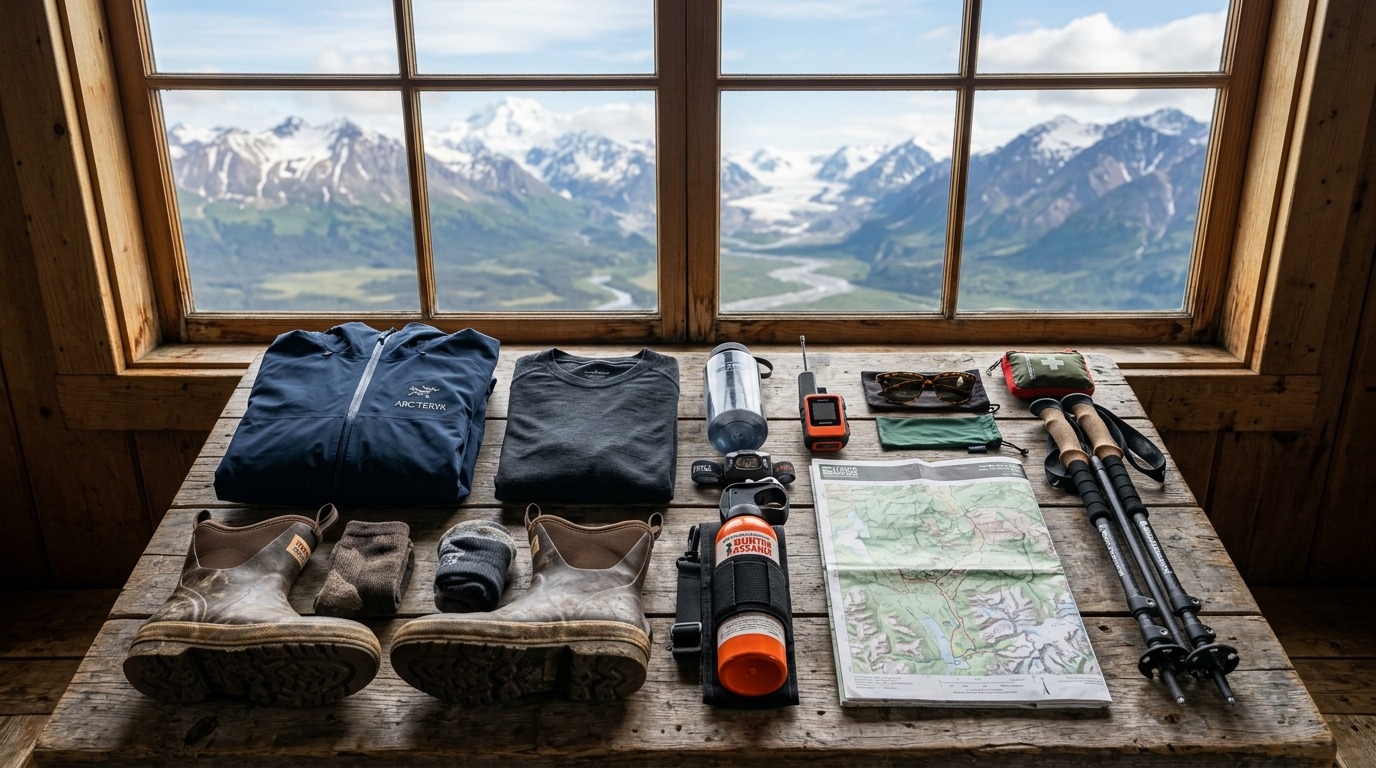
Understanding Subarctic Summer Weather Dynamics
Packing for an Alaskan summer is fundamentally different from preparing for typical North American national parks. In Southcentral and Interior Alaska, summer days (June through August) can swing from a sunny 75°F (24°C) afternoon in Anchorage to a wind-whipped 38°F (3°C) drizzle on the deck of a Kenai Fjords glacier boat cruise in less than four hours.
The Golden Rule of Alaskan wilderness travel is strict adherence to non-cotton technical layering. Cotton denim and casual sweatshirts absorb up to 27 times their weight in water and lose 100% of their insulating properties when damp, creating an immediate risk of hypothermia even in 50°F ambient temperatures. By utilizing a modular 3-layer subarctic system, you can effortlessly shed or add layers as maritime squalls roll across the Alaska Range.
The 3-Layer Subarctic Clothing Architecture
Every item in your suitcase should fit into one of three distinct functional thermal categories:
Base Layer (Moisture Management)
Materials: Merino Wool (150-200g) or Synthetic CapileneWorn directly against your skin to pull perspiration away from your body during strenuous uphill hikes like Mount Marathon or Harding Icefield. Merino wool is naturally antimicrobial and resists odors across multi-day road trips.
- ? 2-3 Short-sleeve merino wool or synthetic t-shirts
- ? 2 Long-sleeve lightweight base layer tops (UPF 50+ sun protection)
- ? 1-2 Pairs lightweight thermal bottoms for glacier cruises and cold mornings
- ? 4-5 Pairs merino wool hiking socks (Darn Tough or Smartwool)
Mid Layer (Thermal Insulation)
Materials: 200g Polartec Fleece, Grid Fleece, or 800-Fill Packable DownTraps dead air warmed by your body to create a thermal barrier. A lightweight packable down or synthetic "puffy" jacket compresses into its own pocket, taking up minimal backpack volume until glacier catamaran breezes hit.
- ? 1 Breathable midweight grid fleece or wool quarter-zip
- ? 1 Ultralight packable hooded down or synthetic jacket (800-fill power)
- ? 2 Pairs quick-dry technical hiking pants (prAna Stretch Zion or Fjallraven)
- ? 1 Casual fleece pullover for evening lodge dining
Outer Shell (Wind & Waterproof Shield)
Materials: 3-Layer Gore-Tex, Pertex Shield, or eVentYour defensive armor against driving coastal rain and 35-knot winds. It MUST be 100% waterproof and seam-sealed ? "water-resistant" windbreakers will wet out completely within 30 minutes in Resurrection Bay storms.
- ? 1 High-performance waterproof breathable rain jacket with pit zips
- ? 1 Pair lightweight packable waterproof rain pants (essential for boat tours)
- ? 1 Windproof fleece beanie and lightweight windproof gloves
Footwear Decision Matrix: Boots vs. Xtratufs
Footwear represents the single most crucial physical contact point between you and the Alaskan backcountry. Review our field comparison below:
| Footwear Category | Recommended Model | Ideal Alaskan Terrain | Pros & Limitations |
|---|---|---|---|
| Waterproof Hiking Boots | Salomon Quest 4 Gore-Tex / Lowa Renegade | Rocky alpine trails, Denali tundra, scree scrambles, Flattop Mountain. | PRO: Maximum ankle stability and rock protection. CON: Heavier; takes 24 hours to dry if submerged. |
| Alaskan Neoprene Deck Boots | Xtratuf 6" Ankle Deck Boot or 15" Legacy Boot | Seward glacier boats, Homer Spit docks, water taxis, muddy riverbanks. | PRO: 100% waterproof, non-slip chevron grip on wet boat decks. CON: Limited arch support for 10-mile alpine ascents. |
| Waterproof Trail Runners | Hoka Speedgoat 5 GTX / Altra Lone Peak ALL-WTHR | Paved coastal trails, light day hikes, urban Anchorage exploration. | PRO: Lightweight, agile, highly breathable. CON: Low ankle profile allows deep mud or glacial silt ingress. |
Wilderness Safety & Field Electronics Checklist
Heading into remote national parks and highway corridors requires specialized safety gear that is rarely needed in the Lower 48:
?? EPA-Approved Bear Deterrent Spray
Must contain 2.0% major capsaicinoids with a minimum 30-foot spray range and 7-second discharge duration (Frontiersman or UDAP). Always carry it in an accessible chest or hip holster ? never buried inside your backpack. Note: Bear spray cannot be flown on commercial aircraft; purchase locally in Anchorage.
?? Two-Way Satellite SOS Communicator
Cellular reception drops to zero along 70% of the Parks Highway, Glenn Highway, and Kenai Mountains. A Garmin inReach Mini 2 or ZOLEO device allows two-way satellite messaging with emergency dispatch and family check-ins from anywhere in the Alaskan wilderness.
?? Insect Protection & Fine-Mesh Head Nets
Interior Alaska (especially Denali and Fairbanks river corridors in June and July) features aggressive swarms of mosquitoes and subarctic biting midges ("no-see-ums"). Pack a fine-mesh no-see-um head net and Picaridin 20% or DEET 30% insect repellent spray.
??? 100% Polarized Glacier Sunglasses
With 19 to 22 hours of daily summer sunlight reflecting off ancient glacier ice and maritime waves, high-category polarized sunglasses (Category 3 or 4) are non-negotiable to prevent acute photokeratitis (snow blindness) and eye strain.
Month-by-Month Summer Packing Adjustments
Pack a contoured sleep eye mask (essential for blocking 24-hour daylight in hotels), higher SPF 50 sunscreen, and insect head nets for early mosquito emergence.
Pack quick-dry swimsuits for hotel hot tubs or Chena Hot Springs, maximum insect repellent, breathable sun hoodies, and waterproof rain gear for afternoon maritime showers.
Pack an extra heavy fleece mid-layer, heavier gloves, a reliable headlamp with red-light mode for astrophotography (dark skies return Aug 21 for Northern Lights viewing), and heavy-duty waterproof rain pants for Southcentral storms.
Frequently Asked Questions: Alaska Packing List Summer
What is the number one packing mistake tourists make in Alaska during summer?
The most common mistake is bringing heavy winter parkas or cotton jeans. Cotton traps moisture and causes rapid hypothermia when wet. Instead, seasoned Alaskans rely on synthetic or merino wool moisture-wicking base layers paired with a 100% waterproof Gore-Tex breathable shell.
Can I pack bear spray in my checked airline luggage?
No. The FAA strictly prohibits bear spray (EPA-registered capsaicinoid deterrents) in both carry-on and checked luggage. You must purchase or rent your bear spray upon arrival at outdoor retailers in Anchorage, Fairbanks, or outdoor gear kiosks at ANC Airport.
Do I really need rubber rain boots (Xtratufs) for an Alaska summer road trip?
For general highway driving and dry day hikes, waterproof trail runners or Gore-Tex hiking boots are sufficient. However, if you plan to board small fishing charters, take beach water taxis in Homer or Halibut Cove, or hike muddy coastal fjord trails in Seward, ankle-high or 15-inch neoprene Xtratuf boots are indispensable.
How cold does it actually get in Alaska during summer months (June to August)?
Coastal and Southcentral temperatures typically range between 55°F and 72°F during the day, dropping to 45°F - 52°F at night. However, when standing on the open viewing deck of a glacier catamaran cruise near Holgate Glacier or at windy alpine elevations in Hatcher Pass, wind chill drops the real feel to 34°F - 38°F.
Why are polarized sunglasses essential for Alaska summer travel?
Alaska summer days feature up to 22 hours of continuous solar exposure. When viewing tidewater glaciers, marine fjords, or snowfields, intense ultraviolet surface reflection creates severe eye fatigue and snow glare. Polarized lenses cut surface water glare to spot marine wildlife like beluga whales and sea otters.
Make Alaska Travel Pros a Preferred Source
Keep Alaska itineraries and road-trip guides highlighted in Google Search.